
"Yunnan coffee culture"
800 article(s) found
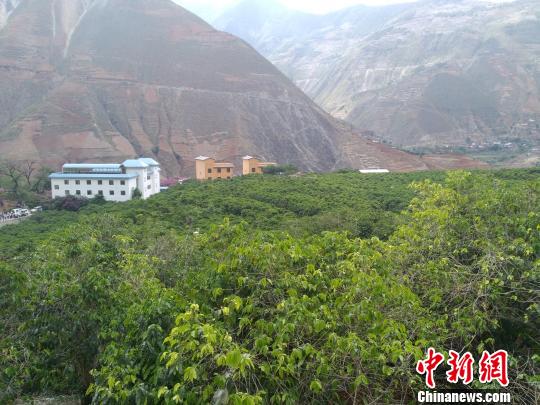
Experts and scholars from five countries in Yunnan Binchuan discuss the new development of century-old coffee
Professional baristas please follow the coffee workshop (Wechat official account cafe_style) on the 16th, coffee experts and scholars from China, the United States, Ethiopia, India and France gathered in Zhukula Village, Binchuan, Yunnan Province to open the Zhu Kula Coffee Forum to discuss the future of the century-old coffee-Zhukula Coffee, in order to help ethnic minorities shake off poverty and become rich and Yunnan Coffee goes out. Chinanews.com, Binchuan, Yunnan

The Asian Coffee Annual meeting will be settled in Yunnan and will form a bond with the world.
At the first Asian Coffee Annual meeting, more than 500 experts, scholars and entrepreneurs from home and abroad exchanged widely, reached consensus and issued a joint declaration. According to the declaration, the purpose of the annual meeting is to strengthen coordination and cooperation among Asian countries in the coffee industry, enhance the voice of Asian coffee in the international market, exchange innovative scientific and technological knowledge of coffee, and establish science and use.

Hougu Coffee latest Coffee Brand Culture introduction Hougu Group Honor
Hougu Coffee is the first local coffee brand in China. in addition, there are no other large-scale brands in China. Relying on the huge domestic consumer market and development potential, Hougu Coffee has good market development conditions. The honor of Hougu also develops with the development of the times. 1999 re-contract, trustworthy enterprises 2001 Yunnan Agricultural Science and Technology Promotion Award 2002 South Asia

The rise and Development of Coffee Culture in China
The word coffee introduced into China comes from the Greek word Kaweh, which means strength and enthusiasm. Coffee tree is an evergreen shrub of Capsaceae. Daily coffee is made from coffee beans combined with a variety of cooking utensils, and coffee beans refer to the nuts in the fruit of the coffee tree, which are then roasted with appropriate roasting methods. When the banshee image of Starbucks gradually became familiar to the Chinese.

Yunnan Arabica Coffee with Moderate Acidity Huaguoshan Fine Coffee Bean Origin and Development History and Culture Introduction
Because of the excellent quality of Yunnan coffee, Lujiang No.1 entered the London market in the 1960s and was rated as a first-class product. In recent years, world-famous coffee companies such as Nestle and Mai's have come to Yunnan to open up raw material bases, and Yunnan's products have gradually gained popularity at home and abroad. At present, the average yield of coffee in Yunnan Province has reached 964 kg, and a family contracted land in Lujiang has reached 40 kg.

A brief introduction to the History and Culture of the Origin and Development of Yunnan small Coffee
Yunnan has a long history of growing coffee and has a unique climate advantage. Yunnan small grain coffee has the characteristics of strong but not bitter, fragrant but not greasy, slightly sour and so on. According to the International Coffee Organization, Yunnan small-grain coffee is similar to Colombian small-grain coffee in quality, and its products are highly competitive in the market. At present, 95% of China's coffee raw materials are produced in Yunnan. Therefore, Yunnan's coffee industry is responsible for
The promotion activity of "2016 Pu'er Coffee Culture week" was solemnly held in Pu'er City.
Contestants include Sun Jiaying and Liu Xinxin from Lanzhou; Chen Qi, Fu Wei and Zhao Binbin from Suzhou; Yeats and Huang Xingqi from Wuhan; Sun Yixin, Gao Wenchao and Zheng Huifang from Qingdao; Xu Yating from Taipei; Guo Lijuan, Jiang Qiaoling and Li Zhiqian from Chengdu; Wei Qianting and Wu Weixiang from Guangzhou; Dong Yaqiong, Wang Hongchi, Zhou Yang and Zhou Yang from Beijing

China Coffee Network Coffee Development History of China Coffee Story of Yunnan, China
According to historical records, coffee trees were first planted in Taiwan in 1884, and coffee cultivation in mainland China began in Yunnan. In 1902, a French missionary named Tian introduced seeds from "Yingong" in Binchuan County, Yunnan Province. it was successfully planted in a place called Zhu Kula, a tributary of the Jinsha River.

The contract for the third China Mangshi International Coffee Culture Festival reached 364 million yuan.
Fifteen merchants at home and abroad have signed coffee trade contracts totaling 364 million yuan, including 257 million yuan for coffee beans and 107 million yuan for instant powder. During the cultural festival, businessmen from Singapore, Italy and other countries as well as Shanghai and Sichuan visited Dehong for inspection and negotiation. Models at home and abroad showed Yunnan coffee roasted beans, instant powder and three-in-one coffee.

The main theme of China Mangshi (International) Coffee Culture Festival is "Kiss first Coffee"
Guests went to Hougu No. 1 Coffee Farm to experience the scene on January 24, the 4th China Mangshi (International) Coffee Culture Festival kicked off in Mangshi, Dehong Prefecture, the hometown of Chinese coffee. More than 300 coffee industry people from more than 20 countries and regions around the world and more than 10 provinces and cities in China gathered in Mangshi to taste the kiss coffee promoted by the organizers. Some of the goods in the exhibition this Coffee Culture Festival
History of Coffee Tree planting
In China, according to historical records, coffee trees were planted in Taiwan for the first time in 1884, and coffee cultivation in mainland China began in Yunnan. In 1902, a French missionary named Tian introduced seeds from Yingong, Binchuan County, Yunnan Province. it was successfully planted in a place called Zhu Kula, a tributary of the Jinsha River. The commercial cultivation of coffee in Yunnan began in 1985.

The development history of coffee in China
In China, people like drinking coffee more and more. The ensuing "coffee culture" is full of every moment of life.

The history and culture of Chinese coffee When did coffee come into China?
In Europe, coffee culture can be said to have been very weak, then, coffee into China when it? How long has it been in China? The earliest coffee cultivation in mainland China began in Yunnan Province in the early 20th century when a French missionary brought the first coffee seedlings to Binchuan County in Yunnan Province. Now in China's Guangdong, Guangxi, Yunnan, Taiwan and Fujian Xiamen and other places have a

China will gradually become a new engine to promote the development of the world coffee industry.
This cultural festival is sponsored by China-ASEAN Coffee Professional Cooperation Committee, China Coffee Engineering Research Center, Yunnan Coffee Industry Association, and Dehong Hougu Coffee Co., Ltd. Adhering to the concept of carrying forward Chinese coffee culture, promoting the development of Yunnan coffee industry and guiding coffee consumption, Mangshi (International) Coffee Culture Festival has been successfully held for four times, and the next Coffee Culture Festival

A brief introduction to the History and Culture of the Origin and Development of Yunnan small Coffee Huaguoshan Coffee
In addition, although the environmental problems of coffee cultivation can meet the standards of hot areas, they are far away from the equator, evaporation, large-scale coffee cultivation in Yunnan is less than 1100m above sea level, the severe drought in Yunnan in recent years, and the frost period in the producing areas, and so on, all make the cultivation of coffee can not be guaranteed normally, directly affecting the quality of coffee production. As for other processing problems and the quality of farmers, let alone say so.

Yunnan Hougu Coffee Co., Ltd. Dehong Hougu Coffee
Hougu Coffee has a profound Chinese cultural heritage, absorbing the cultural traditions of Taoism and Confucianism, the meaning of Hougu comes from the moral Sutra, the latter represents the king as the queen, and the Valley represents the upper virtue as the valley. to sum up, the coffee industry is a noble and sustainable industry, and has the meaning of catching up from behind. Profound cultural connotation is the basis of the sustainable development of the brand.

Yunnan Coffee Industry in Southeast Asia ranking of Yunnan small Coffee Brands
Professional coffee knowledge exchange more coffee bean information Please pay attention to the coffee workshop (Wechat official account cafe_style) We have always thought that the world coffee producing area should be mainly in Central and South America. Asians are slow to ripen coffee, and the main consumption is tea culture. Once upon a time Vietnam was the second largest producer in the world, while Yunnan, China, was also eager to catch up, and its quality
Chinese coffee
According to historical records, coffee trees were first planted in Taiwan in 1884, and coffee cultivation in mainland China began in Yunnan. In 1902, a French missionary named Tian introduced seeds from "Yingong" in Binchuan County, Yunnan Province. it was successfully planted in a place called Zhu Kula, a tributary of the Jinsha River.

Chinese coffee taste of cultural life Chinese Yunnan coffee Chinese own coffee brand
In China, people are drinking coffee more and more. The coffee culture that comes with it fills every moment of life. Whether at home, in the office, or in various social situations, people are sipping coffee: it is gradually associated with fashion and modern life. Coffee houses everywhere became a good place for people to talk, listen to music and rest. Coffee gradually developed into a kind of coffee.

Having a cup of coffee while having class? The most romantic major will be Yunnan Agricultural University.
Have you ever heard of such a romantic and interesting class in college class, such as identifying coffee beans, learning to taste coffee and making fancy coffee? Yunnan Agricultural University will declare the coffee and coffee project, relying on the Tropical crops College, not only to enable students to master coffee production, consumption, trade and other related knowledge, but also to train students to identify coffee varieties, master coffee services, brew coffee and other specialties.